In Cold Blood by Truman Capote – 5⭐
“The village of Holcomb stands on the high wheat plains of western Kansas, a lonesome area that other Kansans call “out there.”
This book has been on my TBR for decades really, crazy that I call myself a fan of true crime and yet hadn’t read the first book in the genre. I’m also fascinated by both Truman Capote and Harper Lee (who travelled with Capote to Holcomb and helped with a lot of the research) so it’s doubly crazy that it’s taken me this long to read In Cold Blood. To be perfectly honest, I was kind of intimidated by it. I shouldn’t have been, it’s wonderfully written and well researched book, and I think it deserves all the accolades it’s been given.
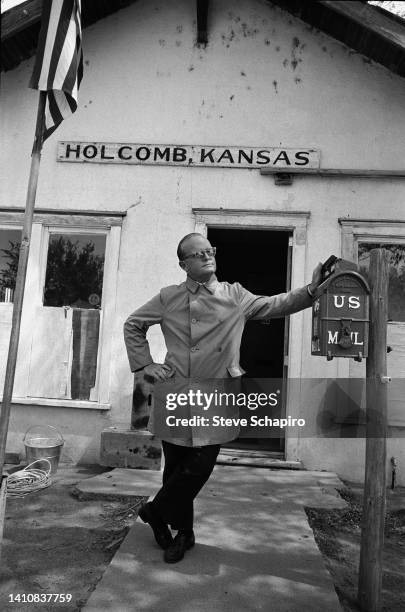
Anyone who knows anything about Truman Capote knows that he was a character, such a character that I didn’t think it would be possible for him to write a piece of work like this without inserting himself. Turns out he was more than capable of doing so, the narrator of In Cold Blood is totally unobtrusive. What we get instead is an astounding level of detail not only about the victims of this horrendous crime, but also the community they belonged to and how the crime impacted that community.
Of course he also gives us a very in depth look at the perpetrators of this heinous crime and while I think it’s important to give us insight to those who commit such awful crimes, I can also understand why people, friends and family of victims in particular, don’t appreciate this level of detail. It’s very clear that Capote had a certain level of sympathy for Hickock and Smith, and it annoyed me that because of the way he wrote about them, that at times I felt myself also sympathising with them. Hickock and Smith had the benefit of being alive at the time Capote wrote this book, and as a result they have much more dimension. The Clutter family didn’t have that same luxury, so Capote’s depiction of them came from research, and as a result the insight into their lives wasn’t as well rounded.
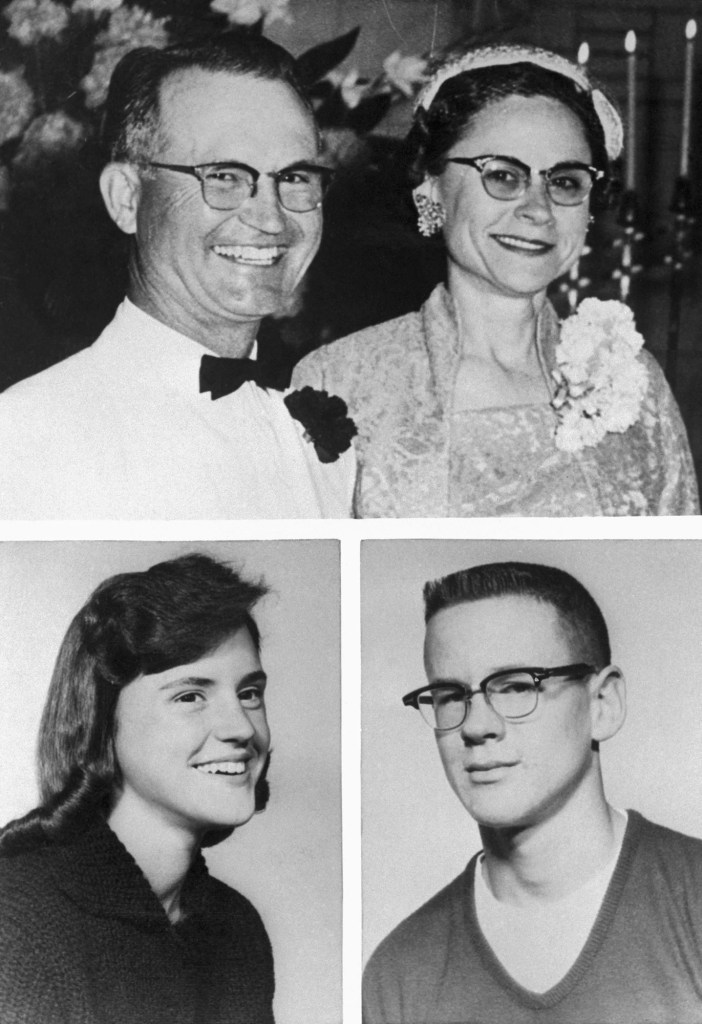
“One day she told the class, ‘Nancy Clutter is always in a hurry, but she always has time. And that’s one definition of a lady.’ ”
Within the Clutter family, Capote seemed to focus mainly on Nancy and Herb, and we got a much better insight into their lives, but even at that I felt that there wasn’t as much dimension to them as Hickock and Smith. Bobby Rupp (Nancy’s boyfriend at the time of her murder) was interviewed for a Guardian article and he talked about why the community of Holcomb were less than pleased with how the Clutter family were portrayed.
Bob Rupp has a third view. He says he has never read In Cold Blood, nor seen the movies, and never will. But he believes that Capote was unfair to the Clutters, because he left to posterity a memory of them that is dominated by the gruesome manner of their deaths rather than the wonderful accomplishments of their lives
And I can totally see his point. Now, his having never read the book makes his opinion a bit less valid, and given how he spoke about Capote earlier in that article, I also think that he held a lot of prejudice against Capote. Having read the book though, I think his assertion that the lives of the Clutter’s became lost to the manner of their death, is correct. It’s my main criticism I have of this book. It’s still an amazing piece of work that is deserving of the praise, and the 5 stars, but it’s important to note that a large amount of the true crime books that came as a direct result of this book often centered the perpetrators and makes it seem like the legacy of their victims is that they were murdered by monsters. I think that’s changing? I also think that the change is slow though and I understand why many people have issues with true crime as a result.
I’m not going to dive too deep into the psyche of Hickock and Smith, Capote does that for us, and I truly did appreciate the insight. Looking at the whole picture when trying to decipher why killers like Hickock and Smith would do something so evil, was a relatively new practice in late 1950’s America. But also? Fuck these guys! Many a person has lived lives just like theirs, and didn’t go on to murder anyone. I have compassion for their families, Smith’s sister, and Hickocks kids in particular, but I don’t have any for these two assholes. I don’t support the death penalty, and I don’t think they should have been executed, but that’s a humanity issue. The reality is, that at that time (not sure if it’s still the case and I’m too lazy to check) Kanas didn’t have life without the possibility of parole, these two monsters could have been let go had they not been executed, and given that they had absolutely no remorse, that possibility is horrifying.
“I thought that Mr. Clutter was a very nice gentleman. I thought so right up to the moment that I cut his throat.”
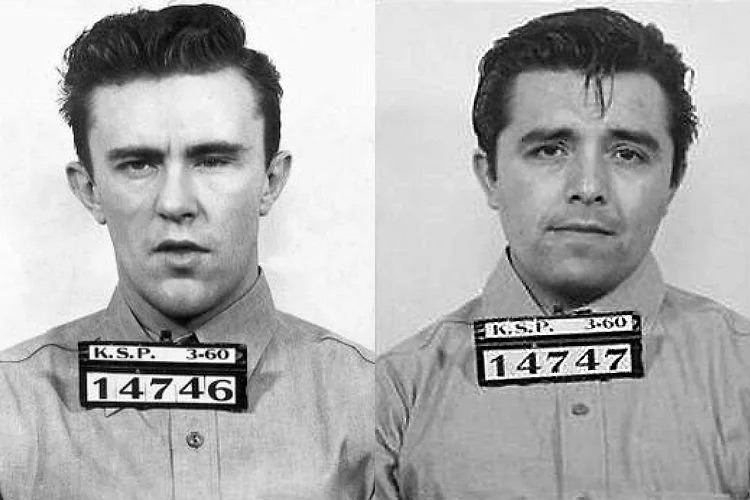
“There’s got to be something wrong with us. To do what we did.”
I’m glad I finally read this, even with the criticism I have of it, it’s still an outstanding piece of work. I hope everyone affected by this awful crime managed to live a somewhat normal life.

Amazon UK

 mindforbooks.ie
One Comment Add yours